 WELCOME TO HANGZHOU FANTAI PLASTIC CO., LTD.
  0086-180 5608 2316
 sales@fentechfence.com
 English
  中文简体
中文简体

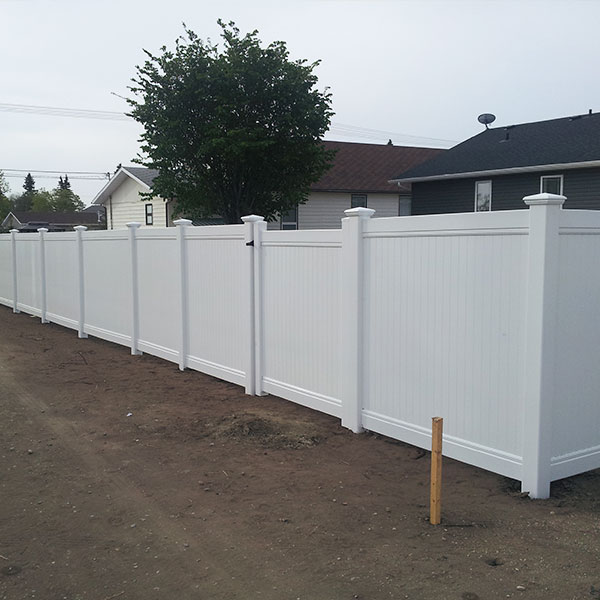
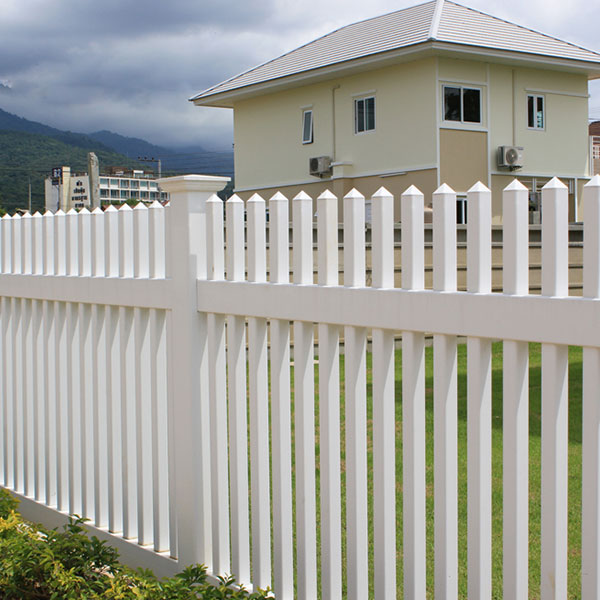
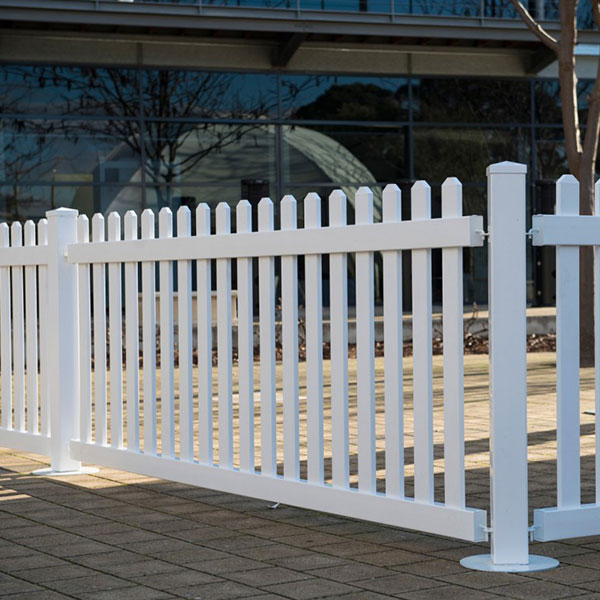


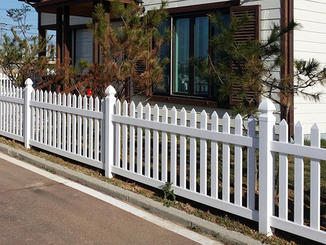

We are professional China Custom Vinyl Fence Manufacturers with fences virgin PVC/Vinyl material and UV Protected.
Content
- 1 Why Horse Fencing Is Different from Livestock Fencing
- 2 Standard Height Requirements for Horse Fences
- 3 Vinyl Post-and-Rail: The Classic Equestrian Fence
- 4 Flexible Horse Fence Straps: Built to Absorb Impact
- 5 Electric Fencing for Horses: Psychological, Not Physical
- 6 Equestrian Fencing for Training and Competition Spaces
- 7 Choosing the Right Fence for Your Property
A horse can clear a 5-foot fence in under a second when spooked — and the wrong fence won't just fail to stop it, it can cause serious injury on the way through. Choosing the right horse fence is one of the most consequential decisions you'll make for your equestrian property. This guide cuts through the options and gives you the facts you need to make that call confidently.
Why Horse Fencing Is Different from Livestock Fencing
Horses are not cattle. They're athletic, reactive, and prone to bolting when frightened. Barbed wire — the go-to for cattle operations — is one of the most dangerous fencing choices for horses. Their thin skin, tendency to lean and rub, and high-speed flight response mean that any fence capable of causing lacerations becomes a liability.
The three criteria that matter most for equine fencing are visibility (horses must see the boundary before they hit it), impact safety (the fence should deflect or absorb, not slice), and psychological deterrence (the horse should respect the barrier without needing to test it physically). No single material checks every box equally — which is why many equestrian properties use a combination of fence types.
Standard Height Requirements for Horse Fences
Height is non-negotiable. University of Georgia's equine fencing guidelines recommend a minimum of 60 inches (5 feet) for perimeter fencing and 54 inches for internal dividing fences. Stallions and high-strung breeds may require taller installations.
The bottom rail should sit 6–8 inches off the ground — low enough to define the boundary, high enough that hooves can't catch underneath it. Rail spacing matters too: gaps wide enough for a horse's head or hoof to pass through create entrapment risks that can result in broken legs.
| Application | Recommended Height | Notes |
|---|---|---|
| Perimeter / Pasture Fence | 5 ft (60 in) | Minimum; add height for jumpers or stallions |
| Internal / Cross Fence | 4.5 ft (54 in) | Suitable for dividing paddocks |
| Paddock / Corral | Eye level with horse's head | Typically 4–6 inches above withers |
| Bottom Rail Clearance | 6–8 inches off ground | Prevents hoof entrapment |
Vinyl Post-and-Rail: The Classic Equestrian Fence
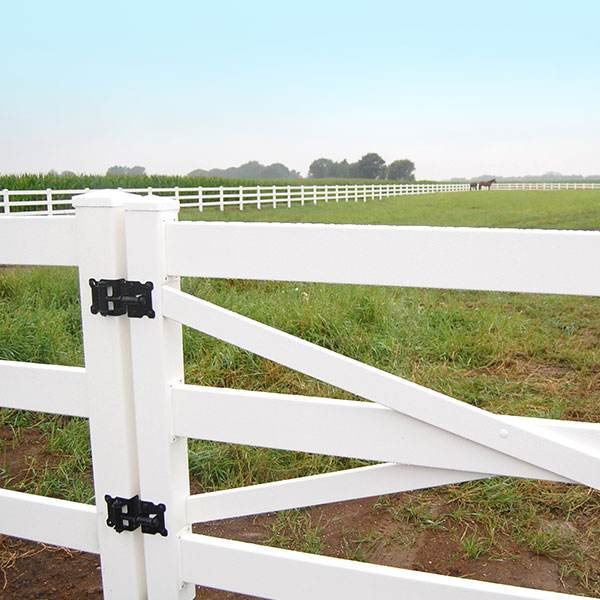
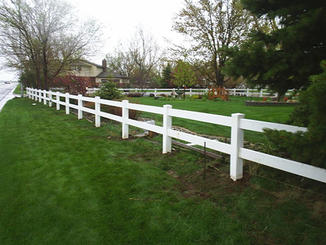
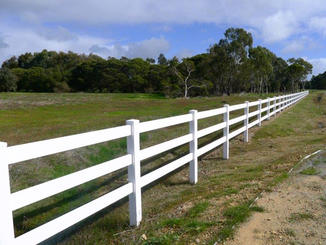
The white post-and-rail fence is the defining image of a professional horse property — and it earns that reputation for more than aesthetics. Vinyl PVC rail fencing offers a smooth, splinter-free surface with no protruding hardware, making it one of the safest options for horses that lean, rub, or run close to the fence line.
Fentech's vinyl post-and-rail horse fence line includes 2-rail, 3-rail, and 4-rail configurations, available in round rail and board profiles. The 3-rail 2×6 board fence is a popular choice for perimeter pastures where both containment and curb appeal are priorities. Unlike wood, it won't rot, warp, or require annual painting — a meaningful long-term cost advantage for large properties.
One practical consideration: standard vinyl rail fencing is a physical barrier, not a psychological one. Some horses — especially younger or more dominant animals — will test it. For those cases, a single strand of electric fencing added to the inside face of the rail fence eliminates the problem without changing the appearance from the road.
Flexible Horse Fence Straps: Built to Absorb Impact
Not every equestrian property is flat, and not every horse owner wants the rigidity of a fixed rail system. Flexible fence straps address both challenges. Rather than snapping under pressure the way a rigid rail can, a flexible strap deflects and returns — reducing the risk of injury if a horse makes contact at speed.
Fentech's flexible horse fence rail (FT-108R-E) combines high visibility with engineered flex. It's particularly well-suited for properties with irregular terrain, where rigid fencing would require complex stepped installations. The strap system also integrates with electric fence energizers, giving you the option to add a deterrent current without running separate wire.
From a practical standpoint, flexible rail is faster to install, easier to repair, and handles ground movement better than rigid alternatives — an important factor in regions with significant freeze-thaw cycles.
Electric Fencing for Horses: Psychological, Not Physical
Electric fencing works on a fundamentally different principle than physical barriers. The goal is not to contain a horse by force — it's to teach the horse not to challenge the fence at all. A properly energized electric fence delivers a short, sharp pulse of high voltage at very low amperage: enough to create a memorable deterrent, not enough to cause injury.
Horses are actually well-suited to electric fence training. They have thin skin, are typically well-groomed, and — when shod — their metal shoes provide excellent ground contact, making the correction immediate and clear. Most horses learn to respect an electric fence after one or two contacts. After that, the fence works as a psychological boundary even when the energizer is temporarily off.
Fentech's electric fence product range includes polywire, polytape, and electric rope options. For horses specifically, polytape and wide-profile rope are preferred over bare wire — they're far more visible, which matters when a startled horse is moving at speed. Posts should be spaced approximately 10–12 feet apart on level ground, with four equally spaced strands providing optimal visibility and coverage.
One important caveat: electric fencing alone is rarely sufficient as the sole perimeter barrier for horses. Its strength is as a supplemental deterrent — running a single hot strand along the inside of an existing physical fence is one of the most effective and cost-efficient ways to stop horses from leaning, cribbing, or testing a fence line.
Equestrian Fencing for Training and Competition Spaces
Beyond pastures, equestrian properties often require specialized fencing for arenas, race tracks, and show jumping courses. These applications have different priorities: arena fencing needs to be highly visible, easy to reconfigure, and professional in appearance; track rail needs to be smooth, impact-absorbent, and durable under repeated close-contact use.
Fentech's equestrian product line covers dressage arena boards, oval rail horse racing track fencing, and show jump equipment — all manufactured in white PVC for maximum visibility and consistent professional presentation. The oval rail track fence in particular is engineered with a smooth profile and no sharp edges, meeting the safety requirements of regulated equestrian events.
Choosing the Right Fence for Your Property
The right answer depends on how you use your property, what your horses are like, and your maintenance appetite. A 3-rail vinyl post-and-rail fence with an interior electric strand covers the majority of equestrian applications well: it's safe, visible, durable, and effective for almost any horse temperament. If your terrain is variable or you need temporary rotational grazing divisions, flexible electric rail adds versatility without compromising safety.
Whatever combination you choose, prioritize visibility and impact safety above aesthetics or cost per foot. A fence that saves a veterinary bill — or a horse's life — pays for itself quickly. You can explore the full range of horse fencing systems to compare configurations and find the right fit for your pasture, arena, or track.
 No. 142 Xinxiqiao, Linan, Hangzhou City, Zhejiang Province, 311300, China
 0086-180 5608 2316
 sales@fentechfence.com