 WELCOME TO HANGZHOU FANTAI PLASTIC CO., LTD.
  0086-180 5608 2316
 sales@fentechfence.com
 English
  中文简体
中文简体


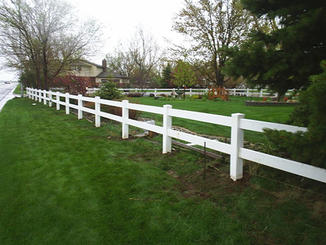
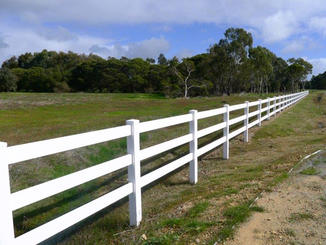
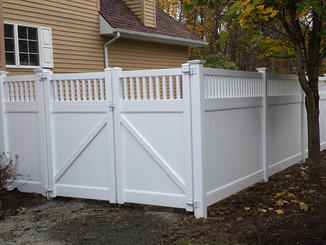
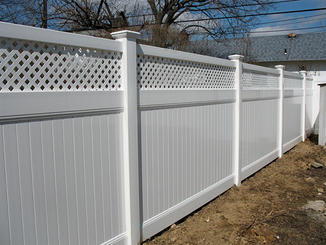
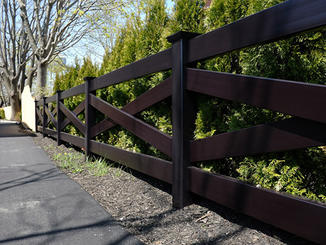
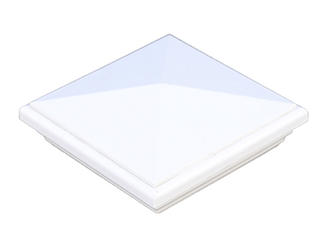
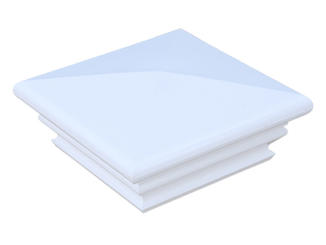
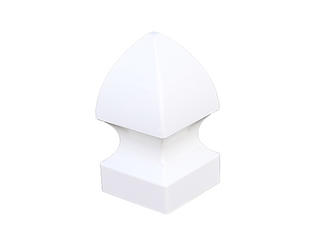

We are professional China Custom Vinyl Fence Manufacturers with fences virgin PVC/Vinyl material and UV Protected.
Content
- 1 What Makes a Good Wood Fence Replacement?
- 2 Vinyl Fencing: The Most Balanced Wood Fence Alternative
- 3 Composite Fencing: A Wood-Look Option Without the Wood
- 4 Aluminum and Steel: The Low-Profile Metal Option
- 5 Other Practical Alternatives Worth Considering
- 6 Cost vs. Lifecycle: A Quick Comparison
- 7 How to Choose the Right Alternative
Every wood fence fails eventually. The posts rot in the ground, the pickets split, the color fades to gray, and the gate sags. If you have spent a weekend replacing rotted boards or repainting a cedar fence, you have probably started pricing alternatives to wood fence materials. For most residential and commercial projects, the most dependable replacement is vinyl (PVC) fencing, with composite and aluminum as strong secondary choices. This guide walks through the main alternatives, their strengths, their limitations, and the cost figures that actually matter when planning a fence.
What Makes a Good Wood Fence Replacement?
Before choosing, define what "alternative" means for your site. A fence that works for a coastal backyard may be wrong for a horse farm. Use these criteria:
- Longevity: The replacement should outlast a wood fence, ideally 20 years or more without major repairs.
- Low maintenance: No yearly staining, sealing, or painting.
- Weather resistance: It should hold up to sun, rain, snow, and coastal humidity without warping or rotting.
- Pest resistance: Termites, carpenter ants, and powderpost beetles should not find it edible.
- Installation and repairability: Panels and rails should be manageable to carry, cut, and replace.
- Aesthetics: It should complement the house or property rather than look like an industrial barrier.
A good wood fence alternative should not trade one set of chores for another. It should be close to zero maintenance, survive a decade of weather, and still look appropriate from the street.
Vinyl Fencing: The Most Balanced Wood Fence Alternative
Vinyl fencing is manufactured from PVC compound and formed into hollow or foamed profiles. Because it contains no organic fibers, it offers no food source for termites, carpenter ants, or wood-boring beetles. It also does not absorb rainwater, which means no swelling, splitting, or rot at the rail ends. The material is strong enough for a 6 ft privacy panel yet flexible enough for posts to move with freezing ground instead of snapping.
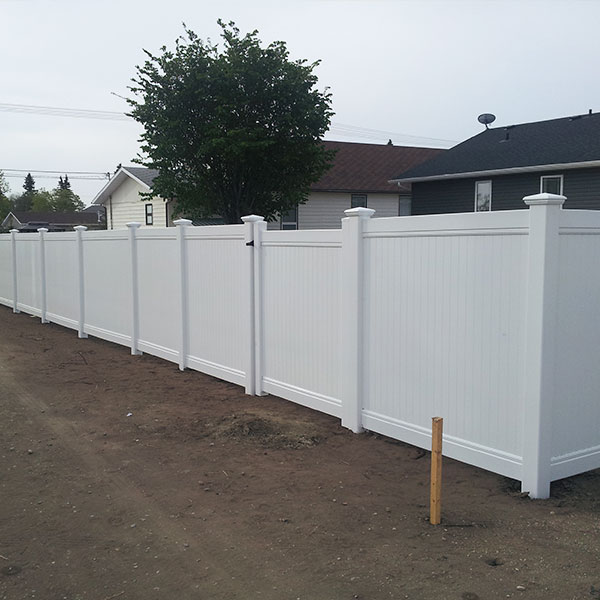
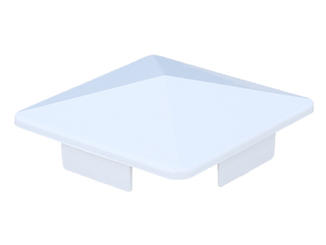
For the most common application, a backyard privacy fence, UV-proof vinyl privacy fence panels are typical of good design: 6 ft by 8 ft panels, dense enough to block sight lines, rails that fit into the posts on site, and color compounded into the profile rather than painted on. Installation is straightforward: set the posts, slide in the panels, and cap the posts. A pressure washer or a bucket of soapy water handles dirt that would normally send you back to the paint roller.
 Custom FT-F02 UV proof 6ftx8ft Vinyl Privacy Fence Suppliers, OEM Factory - HANHANGZHOU FANTAI PLASTIC CO. LTD is China Custom FT-F02 UV proof 6ftx8ft Vinyl Privacy Fence Suppliers and OEM Factory, Many homeowners p...View Product →
Vinyl's weak point has always been low-grade impact strength. Low-quality PVC can shatter on a cold morning, so look for multi-layer impact modifiers and a spec sheet that lists low-temperature brittleness below -20 degrees C. A manufacturer with production data will provide that. For a head-to-head look at how wood and vinyl perform over a decade, refer to this wood versus vinyl durability breakdown.
Composite Fencing: A Wood-Look Option Without the Wood
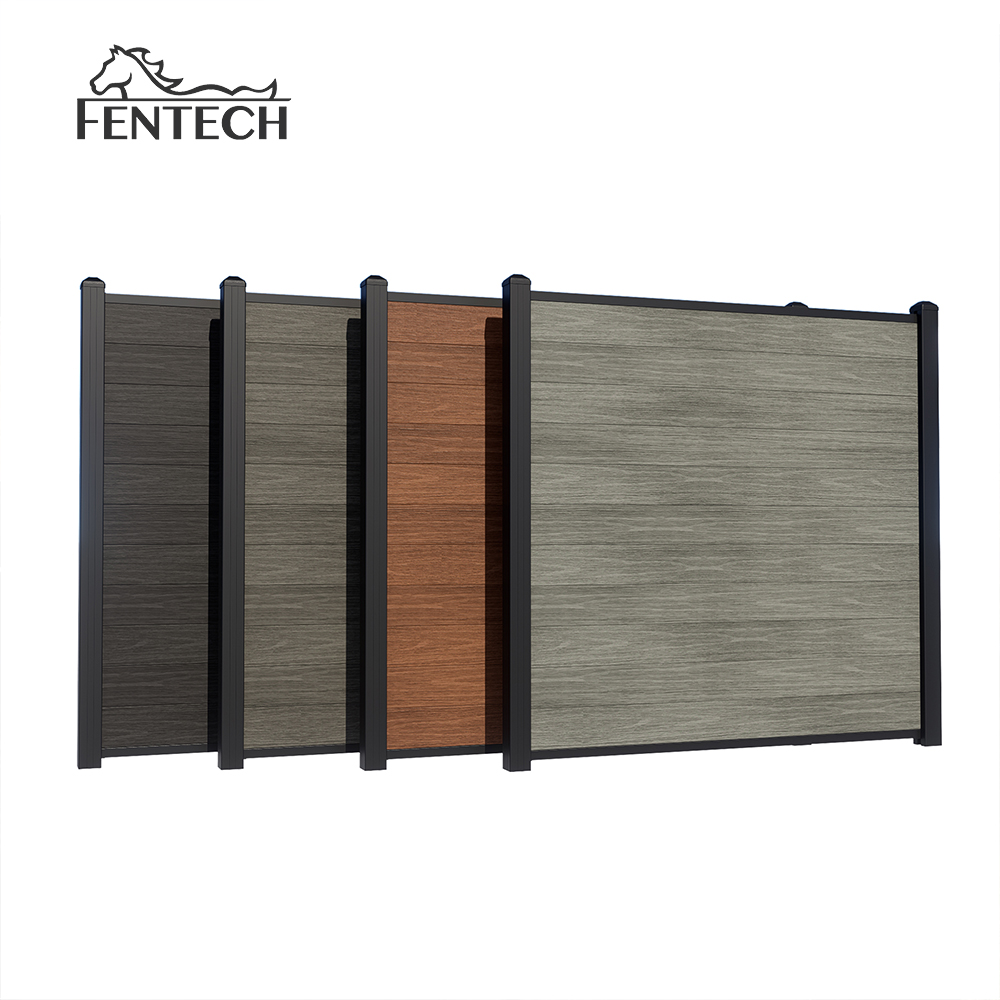
Composite fencing appeals to people who want the warmth of wood but not the maintenance. It is made from wood flour or bamboo fiber combined with HDPE plastic, often with a co-extruded cap for color and protection. Composite boards look convincing from a few meters away, and they do not crack or split like lumber.
However, composite is heavier and denser than vinyl, which affects handling and hardware requirements. The upfront cost is usually higher, and long-term color stability depends on the cap quality. In hot southern sun, a low-end composite can fade or chalk, while a properly capped product will keep its color and shed moisture. Many suppliers group composite and vinyl in one catalog, which helps when a project blends the two materials. You can inspect ready-made composite fence configurations as a starting point.
Aluminum and Steel: The Low-Profile Metal Option
Aluminum is the best-looking metal choice for homeowners who want a fence that reads as architectural rather than agricultural. Rails and pickets are usually welded into panels and finished with a powder coat. Unlike wrought iron or low-grade steel, aluminum does not rust, so it is safe for coastal yards. The main limit is privacy: an aluminum fence is transparent by design. It works well for a front-yard boundary, a gate beside a house, or a pool enclosure where sight lines are not the goal. It is also popular on horse farms that need a visible but low-risk boundary.
Other Practical Alternatives Worth Considering
Some projects call for something less conventional. These alternatives have a place, even if they are not complete replacements for a wood privacy fence.
- Bamboo fencing: Affordable, renewable, and visually warm, but bamboo absorbs moisture and can crack if not sealed with a UV-protective treatment every few years.
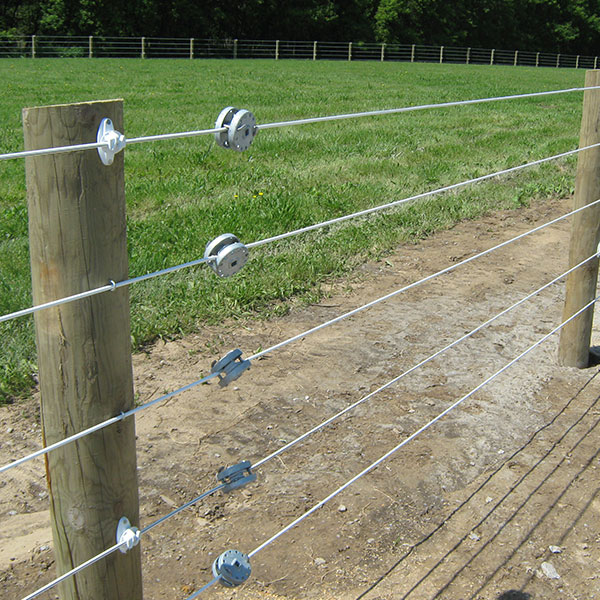
- Wire or mesh with steel posts: Hog panels, welded wire, or field fencing provide a cheap, fast solution for large lots. A frame made from steel or wood posts can make the wire look neater.
- Concrete blocks or masonry walls: Maximum durability and full privacy, but high cost, labor, and a permanent foundation requirement.
- Corrugated metal sheeting: Industrial and fire-resistant, often used on rural property; edge trim and backing posts are necessary.
- Living plant screens: A hedge or green wall is not a structural fence, but it can block views and reduce noise after several seasons.
These solutions are worth considering, but each comes with a trade-off: scheduling, cost, or a look that may not suit a typical suburban lot.
Cost vs. Lifecycle: A Quick Comparison
Material pricing depends on local labor and fill rates, so the relative cost column below is a guide rather than a quote. Rows are ranked from least to most expensive in a typical U.S. market.
| Material | Relative cost | Lifespan | Maintenance | Best for |
|---|---|---|---|---|
| Pressure-treated wood | Low | 10-15 years | Stain every 2-3 years | Budget projects |
| Wire mesh / farm fence | Very low | 10-20 years | Check tension | Livestock, large lots |
| Vinyl / PVC | Medium | 25-30 years | Hose down | Privacy, pickets, property lines |
| Aluminum | Medium-high | 20+ years | Little to none | Decorative boundaries |
| Wood-plastic composite | High | 20-25 years | Wash occasionally | Wood-look appearance |
How to Choose the Right Alternative
With these comparisons, the selection process becomes a series of questions rather than a search for a perfect product.
- How much privacy do you need? Vinyl privacy panels are the only low-maintenance alternative that gives you a full visual block in one installation.
- How important is the view? For pasture, rail, and open property lines, aluminum or vinyl post-and-rail keeps sight lines open.
- What is the weather exposure? For coastal or high-UV sites, vinyl and capped composite handle sun better than painted wood, but aluminum wins on salt spray.
- Who is installing it? A two-person crew can carry a vinyl panel, while composite panels are heavier and more awkward to handle.
Front Yard and Garden Gates
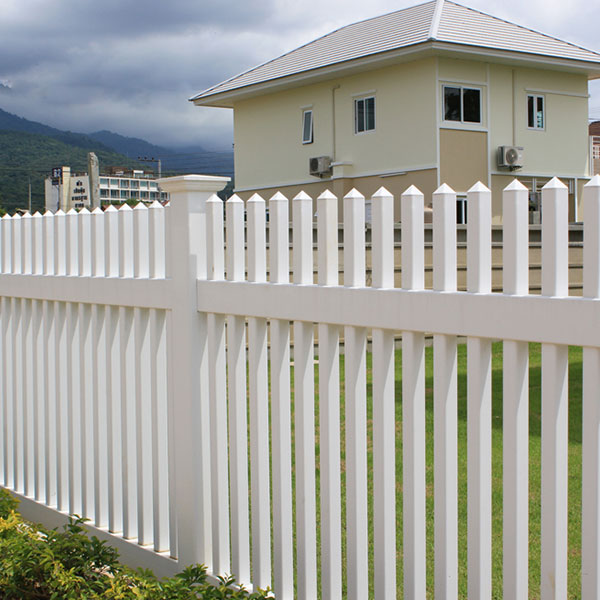
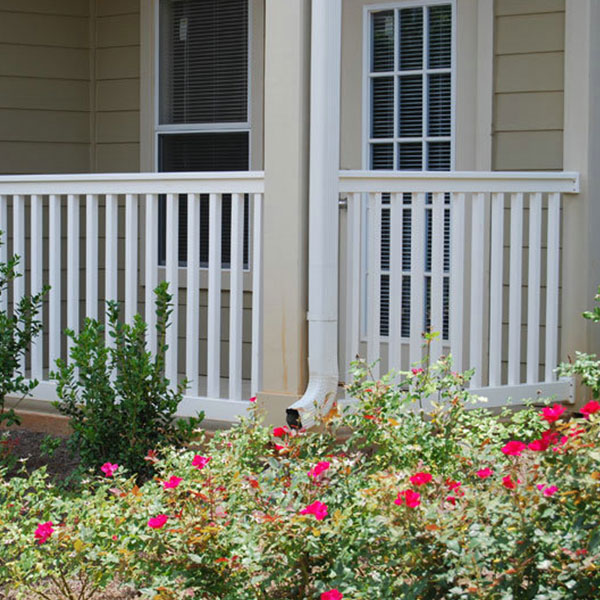
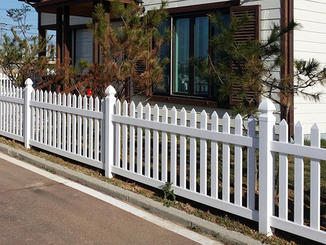
For a front-yard or garden fence, a picket profile is classic and uncomplicated. The classic FT-P01 vinyl picket fence panels replicate the traditional look without stain or paint. They install in sections between posts, which makes a short run or a gate simple to assemble.
 Custom FT-P01 PICKET FENCE 7/8HANGZHOU FANTAI PLASTIC CO. LTD is China Custom FT-P01 PICKET FENCE 7/8'x 3' Picket ,2' x 3-1/2' Rail Suppliers and OEM Factory, Straight...View Product →
Farm, Pasture, and Wider Property Lines
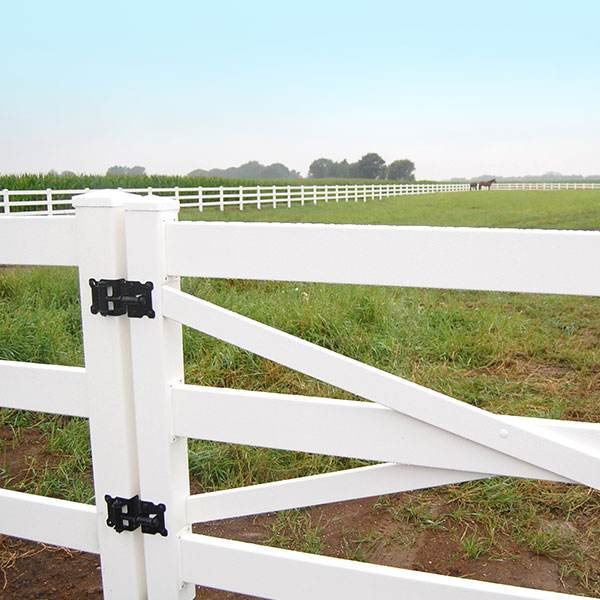
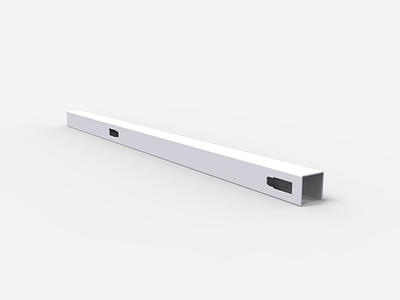
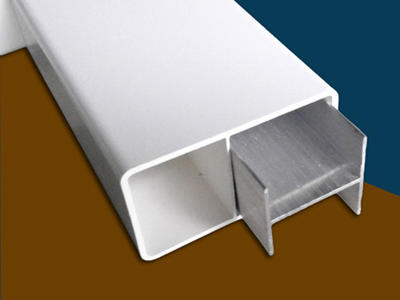
For larger boundaries, a post-and-rail or horse fence profile can span long distances without losing visual appeal. Fentech's vinyl post-and-rail horse fence panels use a reinforced rail that gives a little on impact, so animals are less likely to be injured and horses have no wood to chew. This is also a clean way to divide a pasture without installing wire.
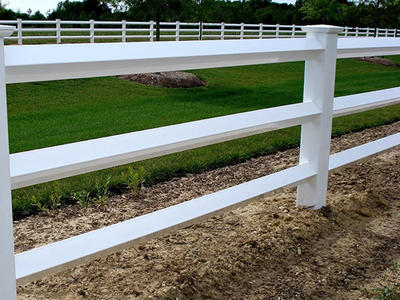 Custom FT-H02D Horse Fence Suppliers, OEM Factory - HANGZHOU FANTAI PLASTIC CO. HANGZHOU FANTAI PLASTIC CO. LTD is China Custom FT-H02D Horse Fence Suppliers and OEM Factory,View Product →
Whatever choice you make, ask for three numbers before you buy: the expected service life under local UV conditions, the low-temperature impact rating, and the warranty terms. A cheap alternative is only cheap if it is still standing in fifteen years. Vinyl, composite, and aluminum can each be a good wood fence alternative when you choose a grade that fits your site.
 No. 142 Xinxiqiao, Linan, Hangzhou City, Zhejiang Province, 311300, China
 0086-180 5608 2316
 sales@fentechfence.com