 WELCOME TO HANGZHOU FANTAI PLASTIC CO., LTD.
 0086-180 5608 2316
 sales@fentechfence.com
 English
 中文简体


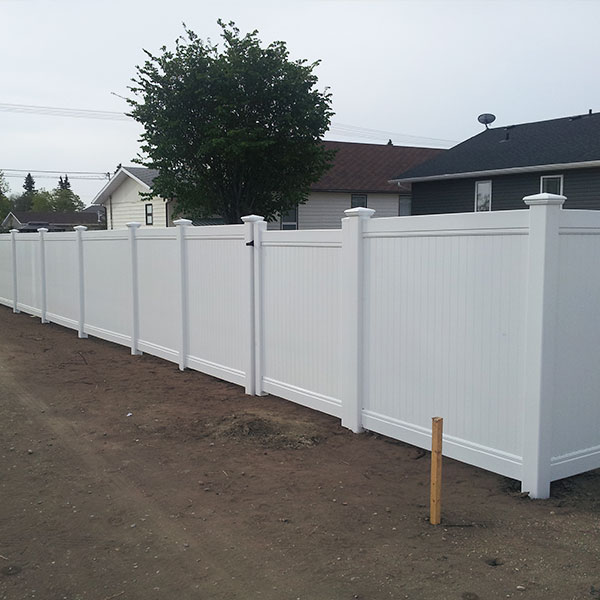
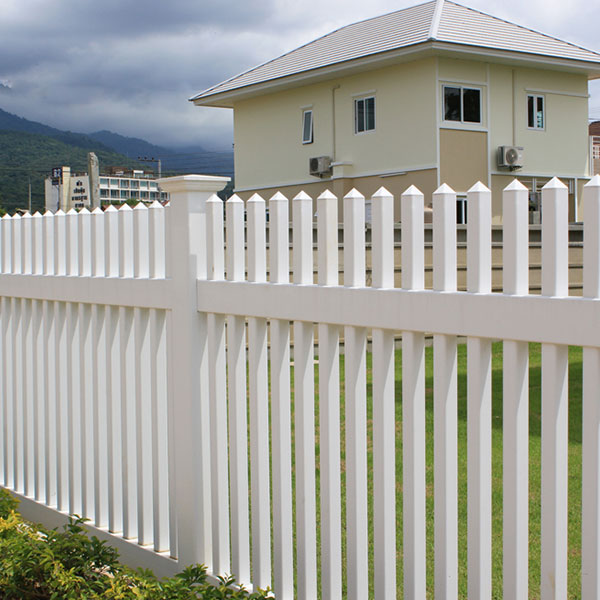
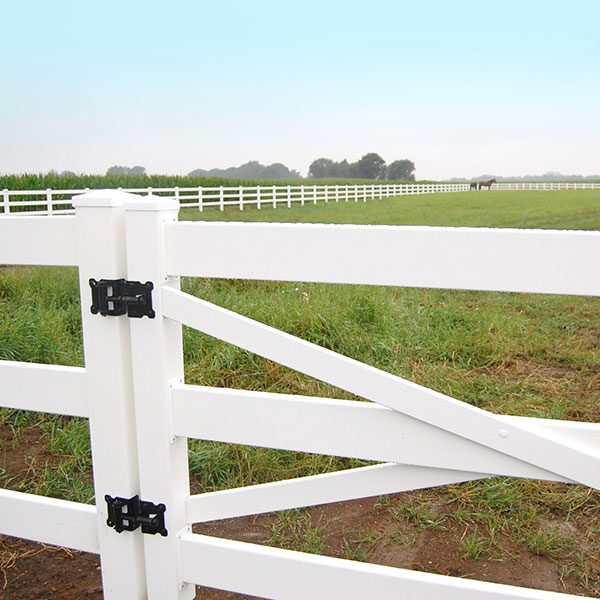
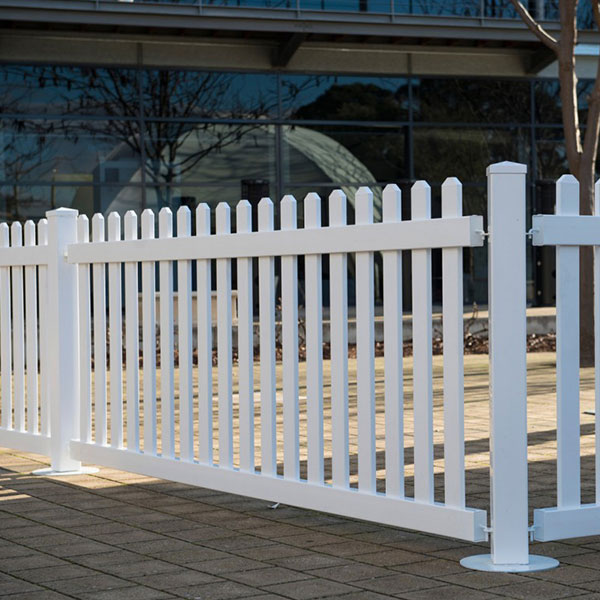


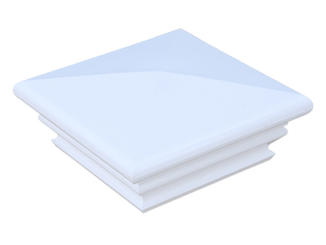
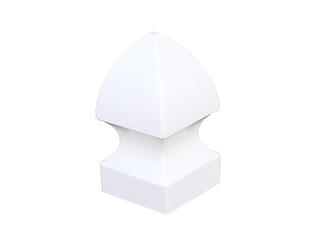
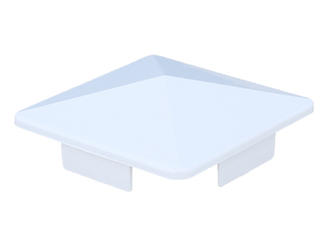
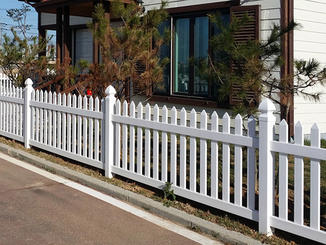

We are professional China Custom Vinyl Fence Manufacturers with fences virgin PVC/Vinyl material and UV Protected.
Content
The complaint we hear most often about vinyl fencing is not durability. It is the look: glossy white panels, chunky caps and picket spacing that announces the material before the design does. A contemporary vinyl fence fixes that with proportion and finish rather than a new polymer.
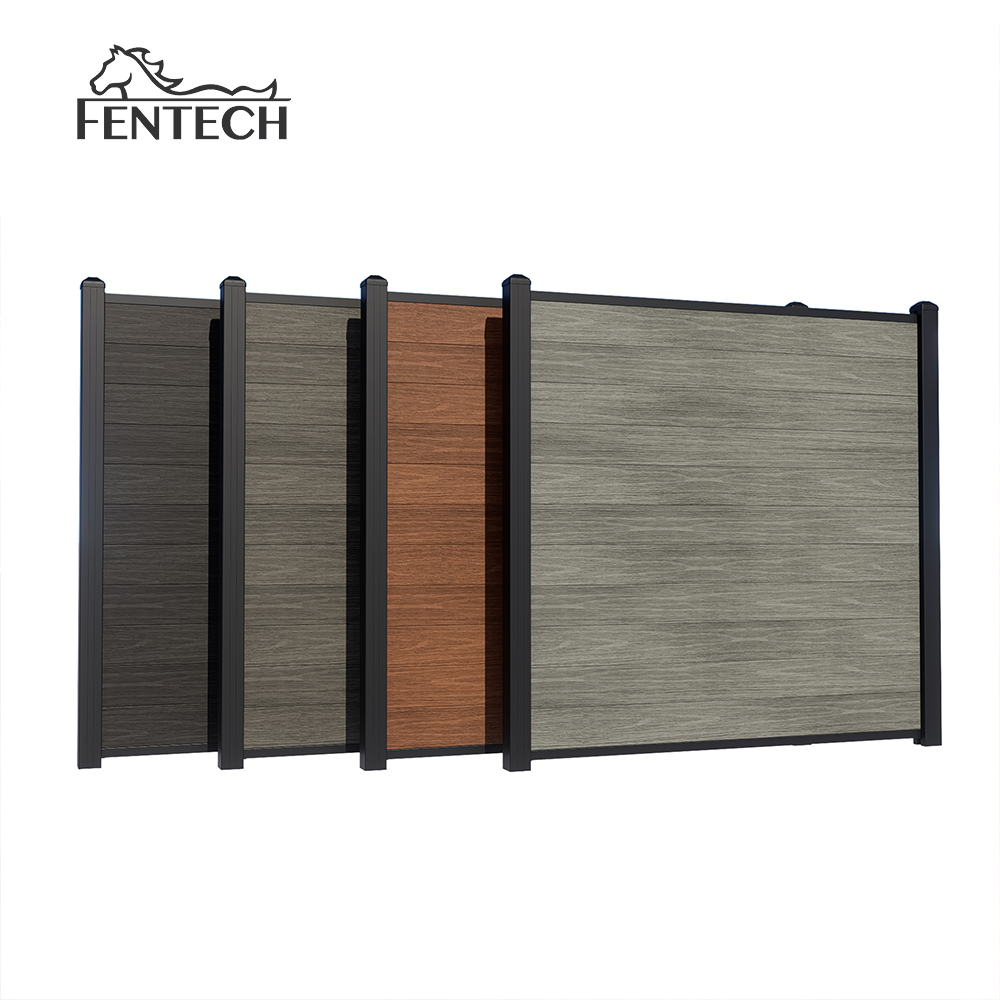
Contemporary, in fencing terms, means restraint. Straight runs, consistent picket rhythm, a top rail that hides its own fasteners, and a surface that does not pretend to be anything other than what it is. Rigid PVC extrusion has caught up with that brief. A 6 ft x 8 ft panel with 2 x 6 rails, 11-3/8 in tongue-and-groove pickets and an ASA capstock that holds a matte tone under UV is now a standard factory item, not a custom request.
Three details do most of the visual work:
- A flat or closed top, where pickets stop beneath a continuous rail instead of poking through it
- A matte capstock, because low gloss reads as painted timber while high gloss reads as plastic
- Consistent bay spacing, with 8 ft panel widths that line up with gate openings and corner posts
On a contemporary elevation the fence is read as a wall plane. The joints, posts and top rail carry the detail; the infill is background. Get those three right and the panel style matters far less than most buyers expect.
Six Vinyl Fence Styles That Read Contemporary
Flat-top privacy, closed-top picket, semi-privacy, horizontal post-and-rail, lattice and mixed vinyl-and-aluminium assemblies are the six configurations that read as contemporary in residential and light commercial work.
| Style | Visual effect | Privacy | Where it works |
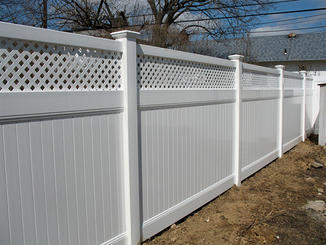
| Flat-top privacy | One continuous plane with a single top line | Full | Rear yards, pool surrounds, tight urban lots |
| Closed-top picket | Vertical rhythm captured inside a top rail | Moderate | Front boundaries and entry courts |
| Semi-privacy | Wide pickets with a deliberate, even gap | Partial | Courtyards, side returns, hot climates |
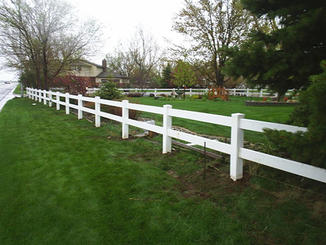
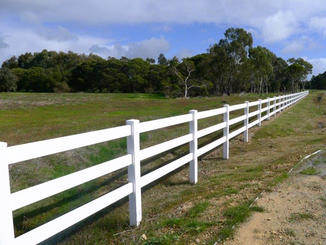
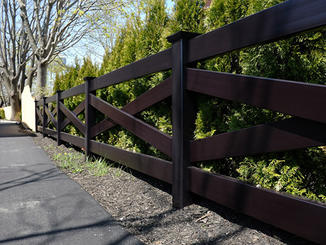
| Three-rail post and rail | Two or three horizontal lines, open sky | Low | Acreage, rural-modern homes, paddock edges |
| Lattice panel | Square grid used as texture, not as structure | Low to partial | Feature bays, trellis walls, screen panels |
| Panel between aluminium posts | Thinner frame lines and darker hardware | Full | High-wind sites, precise architectural work |
 Customizable PVC Raised Garden Bed KitA 45 by 45 by 13.3 inch PVC raised bed with grid layout, open bottom and tool-free assembly; multiple kits can form DIY shapes.View Product →
The flat-top privacy panel is the workhorse of the set. A 6 ft x 8 ft panel with 2 x 6 rails and 11-3/8 in tongue-and-groove pickets gives a continuous surface with a single clean line at the top, and it can be stepped down a slope without the staircase silhouette that plagues narrow picket sections.
Semi-privacy is the fastest-moving request on tight urban lots. Wide pickets with a deliberately even gap break sightlines at eye level while still letting afternoon light across the boundary, which matters more than raw coverage on a small plot.
Colour, Texture and the UV Question
Colour and gloss decide whether a contemporary vinyl fence looks architectural or plastic, and the component that controls both over the service life is the UV-rated capstock layer on the weathering face.
Vinyl fence profiles are co-extruded: a rigid PVC core for strength and a thin capstock on the outside. On a modern fence, the capstock is where the money goes. An ASA capstock formulated to a high UV standard holds a matte woodgrain or a deep charcoal without chalking, and it keeps colour consistent from batch to batch, which matters when a project runs across two shipments.
6 ftCommon privacy height, still inside most residential limits
8 ftStandard panel width, which sets the post bay
ASACapstock layer specified for UV-exposed faces
If the terminology is causing trouble on a spec sheet, this explanation of vinyl versus PVC fence covers why the two words describe the same polymer in this application. One practical note on darker tones: charcoal and deep olive absorb more heat, so panels move slightly more across the seasons, which is why installation tolerance is covered below rather than left to the fitter.
Gloss is the tell. A matte capstock catches light the way painted timber does; a high-gloss white extrusion catches it like a cooler lid, and no amount of design work will rescue that.
Specifications That Separate Custom Work From Catalogue Work
Post size, rail profile, picket dimension and gate hardware are the four specifications that decide whether a fence line looks bespoke, and all four are cheaper to change on the drawing than after installation.
Catalogue spec
- 3 x 3 or 4 x 4 post with a flat push-on cap
- Narrow rail with visible fasteners on the face
- Thin pickets in a uniform high-gloss white
- Zinc-plated hinge that sags by the second season
Contemporary spec
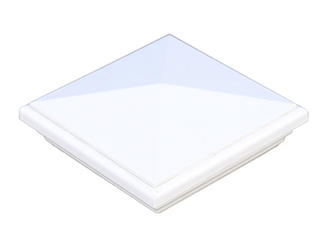
- 5 x 5 post on an aluminium base with a pyramid or gothic cap
- Routed 2 x 6 rail with the fixing concealed in the pocket
- 11-3/8 in tongue-and-groove pickets in a matte capstock
- Stainless steel hinge plus a drop rod on the leaf
 Flat-Top Vinyl Picket Pool Fence PanelA 42-inch flat-top picket panel with routed rails, aluminum bottom reinforcement and matching gate options, suited to pool-code boundary and see-through fencing.View Product →
A closed-top picket shows the difference best. The picket tops sit inside a continuous top rail rather than above it, so the fence presents a single horizontal edge from the street, and the profile can be run in the same matte finish as a privacy panel on the same property.
Hardware is where budget fences fail first. A 5 x 5 post and a routed rail will hold alignment for years, but a plated hinge on a heavy gate will pull, drop the leaf and drag the whole run out of line within two seasons.
Installation Details That Keep the Line Straight
Straightness comes from post setting and panel stepping, not from the panel itself, and a 6 ft privacy run installed on a slope without stepping will show either a gap at grade or a visible step in the top line.
Set the posts to a string line. Mark bays at 8 ft to match the panel width, then confirm the top of each post is level across a single run and consistently stepped where the ground changes.
Leave the expansion allowance. Vinyl moves with temperature, so pickets need clearance inside the rail pocket and at the top rail. Panels packed tight in cold weather will bow in summer.
Step, do not rack. On a gradient, drop each panel by a fixed increment instead of forcing the rail pockets to follow the slope. Racking puts permanent stress on the routed section.
Fasten by hand on hardware. Hinges, caps and brackets are the parts most often over-torqued with an impact driver, and a crushed post wall cannot be repaired on site.
A solid 6 ft privacy panel behaves like a sail in an open site. Post embedment, concrete volume and the depth of the footing matter more than the impact rating of the panel, and one-third of the post length below grade is still the sensible starting rule for exposed ground.
Sourcing Contemporary Vinyl Fence at Volume
Buyers sourcing contemporary vinyl fence in volume should lock four things before the first container ships: profile drawings, the colour and gloss standard, the capstock UV specification, and packing that includes the joint hardware.
- Approve a profile drawing with dimensions in the units your market sells in, since imperial panel sizes are standard for North American distribution
- Sign off a physical colour and gloss sample, not a screen render, and keep the approved chip as the reference for later batches
- State the capstock grade and UV standard in writing, especially for dark tones and woodgrain finishes
- Confirm that caps, brackets, aluminium H-connectors and gate hinges ship with the panels rather than as a second order
Where a project calls for a profile that is not in any catalogue, a factory that runs its own extrusion line can build the tooling around the drawing. Buyers can review the range of custom PVC profiles produced in-house before committing to a mould, which is usually the point where a distributor discovers whether the supplier is a trader or a manufacturer.
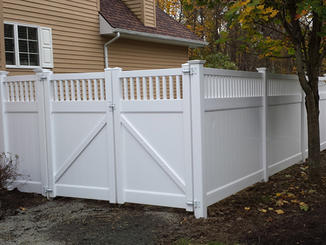 Custom 7/8-inch Tongue-and-Groove Privacy Fence ProfileA 7/8 by 11.3 inch vinyl privacy-fence profile with 0.051 inch wall, offered as a custom/OEM extrusion for projects requiring a specific tongue-and-groove panel.View Product →
Ask for the extrusion tolerance in writing. Wall thickness, picket width and rail pocket depth all carry a tolerance, and a 1 mm drift on a picket width becomes a visible gap across a 30-panel run.
Frequently Asked Questions
Does a contemporary vinyl fence still look like plastic?
Not when the gloss level, top detail and post proportion are specified properly. A matte capstock, a continuous top rail and a 5 x 5 post remove the three visual cues that make cheap vinyl fencing obvious from the pavement.
Can vinyl fence panels be cut or trimmed on site?
Yes. Tongue-and-groove pickets and rails cut cleanly with a fine-tooth blade or a mitre saw, and the trimmed end is normally hidden inside a post channel or covered by a cap, so the cut edge is not exposed to weather.
How long does a modern vinyl fence last?
A rigid PVC fence with a UV-rated capstock typically holds its colour and structure for decades in temperate climates. Service life is limited more by post footings and gate hardware than by the extrusion itself.
Can vinyl panels be combined with aluminium posts?
Yes, and the combination is common on exposed sites. Aluminium posts and H-connectors reduce frame thickness for a sharper line and add stiffness where wind pressure on a solid 6 ft panel is the governing load.
The short version: choose the profile for the elevation, the capstock for the climate, and the hardware for the gate. Those three decisions carry almost all of the visual and practical outcome of a contemporary vinyl fence.
 No. 142 Xinxiqiao, Linan, Hangzhou City, Zhejiang Province, 311300, China
 0086-180 5608 2316
 sales@fentechfence.com
